
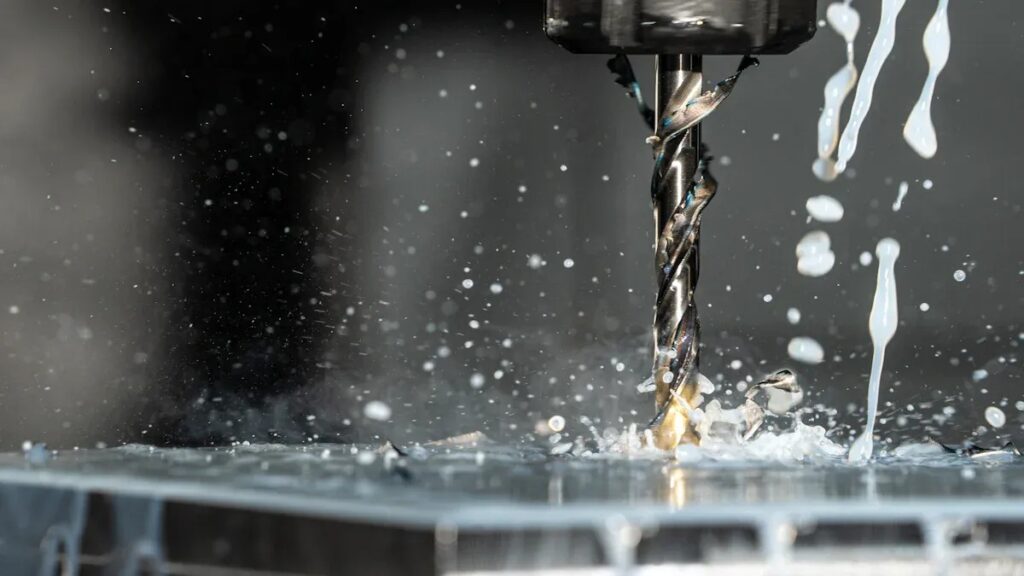
CNC machines use computer control to shape materials with high precision. You see them in factories producing metal, plastic, and wood parts.
- These machines boost efficiency by creating parts faster and with fewer mistakes.
- Automated systems cut labor costs and keep quality consistent.
Ze-tech Mold provides CNC machining, 3D printing, injection molding, and sheet metal fabrication. You can order large volumes or small batches with ease.
Key Takeaways
- CNC machines automate the shaping of materials, improving speed and accuracy in manufacturing.
- These machines are essential in various industries, including aerospace, automotive, and medical, due to their precision and efficiency.
- Understanding the basic components of CNC machines, like the control unit and tooling system, helps in grasping how they work.
- Learning G-code programming is valuable for operating CNC machines effectively and achieving high-quality results.
- CNC technology continues to evolve, with trends like AI integration and smart factories shaping the future of manufacturing.
CNC Machines Overview
Definition
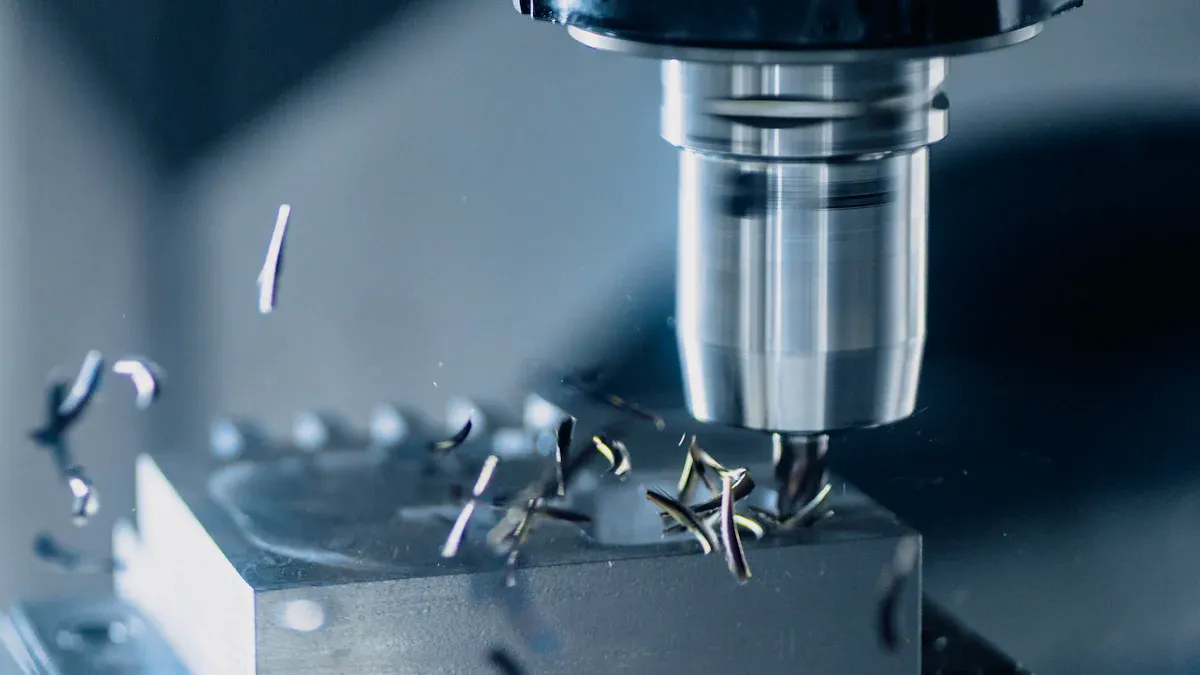
You encounter CNC machines in many industries today. These machines use computer control to automate the shaping and cutting of materials. You can produce complex parts with high accuracy and repeatability. Over the past decade, the global market for CNC machines has grown rapidly. Manufacturers now rely on automation to meet the demand for customized and high-quality products, especially in aerospace and automotive sectors. In 2022, the market reached about $70 billion, and experts expect it to keep rising as technology advances.
Key Components
Every CNC machine contains several essential parts that work together to deliver precise results:
- Control Unit: This part acts as the brain, processing instructions and sending signals to other components.
- Drive System: You find this system moving the cutting tool, converting rotational motion into linear movement.
- Tooling System: This system shapes the material using different cutting tools.
- Work Holding Device: You secure the raw material here to keep it stable and accurate during machining.
- Coolant System: This part cools the machine and helps remove chips produced during cutting.
- Axis System: You rely on this system for smooth and accurate movement along different axes.
Tip: Ze-tech Mold offers CNC machining along with 3D printing, injection molding, and sheet metal fabrication. You can order large or small batches to fit your needs.
Manual vs CNC
You may wonder how CNC machines compare to manual machines. The table below highlights the main differences:
| Feature | CNC Machines | Manual Machines |
|---|---|---|
| Accuracy | High precision and repeatability due to automation | Relies on operator skill, introducing variability |
| Efficiency | More productive for high-volume production runs | Suitable for low-volume tasks, slower cycle times |
| Features | Advanced automation, multi-axis machining | Limited automation, manual control |
You see CNC machines leading the way in modern manufacturing. Experts predict even greater changes in the next five years. You will notice more AI integration, smart factories, and localized supply chains. The market could reach $128.86 billion by 2026, driven by the need for efficiency and advanced technology.
How CNC Machines Work
Process Steps
You can break down the CNC machining process into several clear steps. Each step plays a vital role in turning your digital design into a finished product with high accuracy.
- CAD Model Creation and Design Preparation
You start by creating a detailed CAD model. This digital blueprint defines every dimension, tolerance, and feature of your part. - CAM Programming and CNC Program Development
You use CAM software to convert your CAD model into instructions that CNC machines understand. The software generates a program that guides the machine’s movements. - Machine Setup and Workholding Systems
You prepare the machine by mounting the workpiece and installing the cutting tools. Proper setup ensures your part meets specifications. - CNC Machining Operations Execution
The machine follows the programmed instructions. It controls speed, feed rate, and tool paths to shape the material. - Quality Control and Final Inspection
You inspect the finished part using measuring tools. This step checks for dimensional accuracy and surface quality.
Note: Ze-tech Mold can help you with every step, from design to finished product. You can order CNC machining, 3D printing, injection molding, or sheet metal fabrication in large or small batches.
Software & Programming
You rely on software and programming languages to control CNC machines. The process starts with a CAD file, which you convert into machine instructions using CAM software. The most common programming language is G-code. G-code tells the machine how to move, while M-code manages functions like tool changes and coolant flow. These codes ensure your machine translates digital designs into precise physical parts.
You may also encounter other programming options:
- G-code
- M-code
- CAM Software
- Higher-Level Languages (such as APT or Mazatrol)
Here are some common codes you will see:
| Code | Function |
|---|---|
| G | Machine motion |
| M | Miscellaneous machine action |
| F | Feeds |
| S | Spindle speeds |
| T | Tool selection |
Tip: Learning basic G-code helps you understand how CNC machines achieve precision and repeatability.
Axes & Motors
You control CNC machines along multiple axes. Most machines move in three directions: X, Y, and Z. Advanced models add more axes for complex shapes. Motors drive these movements and affect both speed and accuracy.
You will find several types of motors in CNC machines:
- Stepper Motors: Offer precise position control, ideal for accurate placement.
- Servo Motors: Provide high torque and speed, allowing dynamic response and fine control.
- Spindle Motors: Power the spindle for cutting, drilling, and milling.
- Linear Motors: Enable fast, direct linear motion, useful for high-speed tasks.
- Direct Drive Motors: Remove mechanical transmission, reducing backlash and increasing precision.
- Hybrid Motors: Combine stepper and servo features for balanced performance.
Modern CNC machines use thermal compensation systems to maintain accuracy. Standard tolerances range from ±0.05 mm to ±0.13 mm. If you need tighter tolerances, you must use advanced equipment and processes.
Safety Reminder: Always wear safety glasses and hearing protection. Tie back long hair, avoid loose clothing, and keep hands clear of moving parts. Never reach into a running machine. Turn off the machine when finished.
CNC machines use a subtractive manufacturing process. You start with a solid block and remove material to create your part. This method allows you to achieve high precision and repeatability. Automation, flexibility, and consistent quality make CNC machines essential in modern manufacturing.
Types of CNC Machines
Mills
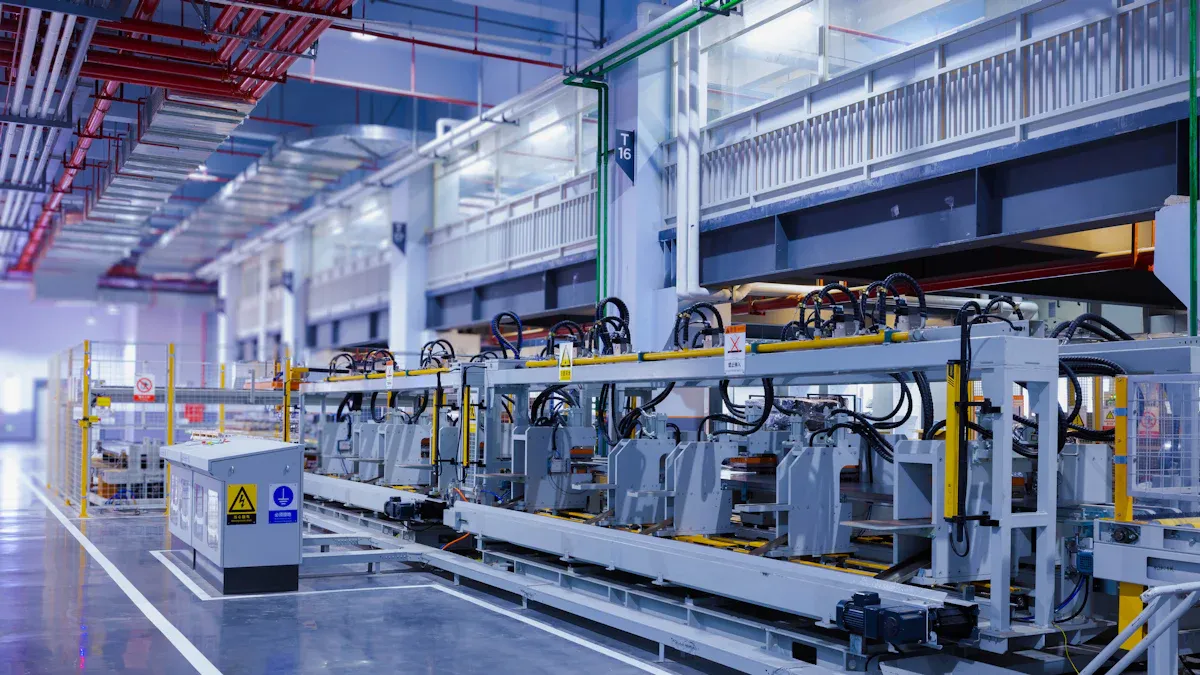
You use CNC mills to create precise 3D parts from solid materials. These machines operate under computer control, following CAD files to guide a rotating cutter. You can produce complex workpieces using multiple axes, such as 3, 4, or 5 axes. CNC milling is popular in industries like aerospace, automotive, and medical manufacturing. You rely on mills for rapid prototyping, batch production, and custom one-off parts.
| Function/Application | Description |
|---|---|
| Versatility | Produces small to medium-sized 3D parts for many industries. |
| Precision | Delivers high accuracy for critical components. |
| Medical Applications | Makes surgical instruments and custom implants. |
| Industrial Use | Manufactures equipment for construction, oil & gas, and more. |
| Non-Industrial Applications | Crafts intricate woodworking, jewelry, and art pieces. |
| Rapid Prototyping | Quickly creates test parts for design validation. |
| Custom One-off Productions | Makes spare or custom parts for specific needs. |
| Batch Production | Mass produces custom or standard parts. |
Lathes
You operate CNC lathes by loading a CAD model and letting the machine read G-code instructions. The lathe spins the material while cutting tools shape it. You can perform turning, drilling, and threading cycles with high precision. Industries such as aerospace, automotive, and medical rely on lathes for parts like shafts, gears, bone screws, and connectors. You benefit from real-time feedback that ensures accuracy in every cycle.
- Aerospace: Shafts, turbine parts, casings
- Automotive: Gears, pistons, axles, transmission components
- Medical: Bone screws, implants, surgical tools
- Oil & gas: Pipe threads, valves, connectors
- Electronics: Housings, connectors, heat sinks
Routers
You choose CNC routers when you need to process softer materials, such as wood, plastic, foam, or non-ferrous metals. Routers use rotating bits to cut and shape materials. You find them less rigid than mills, but they excel at producing large panels and intricate designs. Routers suit woodworking, sign making, and furniture manufacturing.
| Feature | CNC Routers | CNC Mills |
|---|---|---|
| Materials Processed | Wood, plastic, foam, non-ferrous metals | Stainless steel, titanium, aluminum, composites |
| Complexity of Machining | Less complex machining | Higher precision and complex geometries |
| Tooling | Router bits | End mills or drills |
| Rigidity | Less rigid | More rigid |
Plasma Cutters
You use CNC plasma cutters for metal fabrication. These machines cut through metals using a high-temperature plasma arc. You achieve clean, intricate cuts with microscopic accuracy. Plasma cutters offer speed, efficiency, and cost-effectiveness. You reduce labor costs and material waste while handling various metals and complex shapes.
- Precision and Accuracy: Clean, intricate cuts
- Versatility: Handles different metals and thicknesses
- Speed and Efficiency: Rapid cutting, short lead times
- Cost-Effectiveness: Low labor costs, minimal waste
- Complex Shape Cutting: Excels at intricate designs
Specialized Types
You encounter specialized CNC machines in many industries. These machines perform unique tasks, such as lens molding in optics or embroidery in textiles. You see them in food processing, entertainment, telecommunications, and research. Specialized machines help you create custom jewelry, sporting goods, and even spacecraft components.
| Industry | Examples of CNC Machines and Applications |
|---|---|
| Optics | Lens molds, optical assemblies, micro-optic components |
| Food Processing | Cutting blades, molds, conveyor components |
| Textiles | Embroidery, cutting, weaving machines |
| Entertainment | Prop making, stage sets, musical instruments |
| Telecommunications | Connectors, antenna components, enclosures |
| Research & Development | Prototype production, test equipment, custom parts |
| Furniture Manufacturing | Intricate designs, frameworks, custom furniture |
| Pharmaceuticals | Production equipment, packaging machinery, lab equipment |
| Biotechnology | Research equipment, medical devices, custom components |
| Sporting Goods | Custom golf clubs, bicycles, sports equipment |
| Space Technology | Satellite parts, rocket components, spacecraft components |
| Chemical Processing | Reactor components, pump and valve parts, heat exchangers |
| Educational Sector | Training equipment, research equipment, prototyping |
| Jewelry Manufacturing | Custom jewelry, intricate designs, mold making |
| Water Treatment | Pump components, valve parts, filter components |
| HVAC | Ductwork, component parts, custom parts |
Tip: Ze-tech Mold offers CNC machines, 3D printing, injection molding, and sheet metal fabrication. You can order large quantities or small batches to fit your project needs.
Materials & Applications
Metals
You often choose metals for CNC machining because they offer strength, durability, and versatility. Aluminum stands out for its lightweight nature and corrosion resistance. Stainless steel provides excellent durability and resists corrosion, making it ideal for medical and food processing equipment. Brass offers good machinability and electrical conductivity, which suits decorative items and valve bodies.
| Metal | Properties | Typical Applications |
|---|---|---|
| Aluminum | Excellent machinability, lightweight, corrosion resistance | Automotive parts, aircraft structures, yachts |
| Stainless Steel | Strength, durability, corrosion resistance | Food processing equipment, medical implants |
| Brass | Good machinability, corrosion resistance, electrical conductivity | Gear wheels, valve bodies, decorative items |
Tip: Ze-tech Mold can machine metals for industries like automotive, aerospace, and medical. You can order large or small batches to fit your needs.
Plastics
You rely on plastics for their flexibility and cost-effectiveness. Acetal (Delrin) offers superior strength and stability, making it perfect for precision parts in automotive and electronics. Nylon resists chemicals and heat, so you see it in insulations and circuit breaker spacers. Polyethylene is common in packaging, while PET is popular for food and beverage containers. PVC stands out for its strength and durability in construction and plumbing.
- Acetal (Delrin): Precision parts in automotive, electronics, industrial machinery
- Nylon: Insulations, sheaths, circuit breaker spacers
- Polyethylene (LDPE/HDPE): Packaging, containers
- Polyethylene Terephthalate (PET): Food and beverage packaging
- PVC: Construction, plumbing
Wood
You use CNC machines to process wood for creative and precise designs. Furniture makers benefit from accurate cutting and the ability to create unique products. Aerospace companies use CNC wood routers for complex shapes. Custom furniture makers achieve intricate designs that are hard to replicate manually. Manufacturing industries gain speed and consistency, reducing labor costs.
| Industry | Benefits of CNC Wood Routers |
|---|---|
| Furniture Industry | Precision cutting and creative design for unique products. |
| Aerospace | Accurate cutting and shaping of materials for complex designs. |
| Custom Furniture Makers | Ability to create intricate designs that are hard to achieve manually. |
| Manufacturing | Increased speed and consistency in production, reducing labor. |
Industries
You see CNC machines in many industries because they deliver precision and efficiency. Aerospace companies need high accuracy for safety and reliability. Automotive manufacturers produce intricate designs and save time. Medical device makers meet strict safety standards. Military and defense sectors require exact specifications. Industrial machinery, energy, marine, and agriculture also depend on CNC technology for custom and reliable parts.
| Industry | Primary Reasons for CNC Adoption |
|---|---|
| Aerospace | High precision for safety and reliability; ability to produce complex components; works with high-strength materials. |
| Automotive | Production of intricate designs; continuous operation reduces time and cost; works with various materials. |
| Medical | Precision for complex devices; meets strict safety standards for implants and instruments. |
| Military & Defense | Exact specifications for weapons and vehicles; quick production of complex parts. |
| Industrial Machinery | Produces precise machinery for food and beverage; capable of various shapes and tolerances. |
| Energy | Produces parts for renewable energy systems; ensures reliability and cost savings. |
| Marine | Ensures performance and safety of vessels; produces complex components for propulsion and steering systems. |
| Agriculture | High-precision components for farm machinery; custom parts for various agricultural vehicles. |
Note: Ze-tech Mold supports these industries with CNC machining, 3D printing, injection molding, and sheet metal fabrication. You can request both large and small batch orders.
CNC Machines: Pros & Cons
Advantages
You gain several important benefits when you use CNC machines in your manufacturing process:
- Precision: You achieve tight tolerances and consistent quality with every part.
- Efficiency: Automation lets you produce parts faster than manual methods.
- Versatility: You create complex shapes and designs that manual machines cannot handle.
- Reduced labor costs: You need fewer operators, which lowers expenses.
- Improved safety: Automation keeps you away from dangerous moving parts.
- Environmental impact: You use materials more efficiently, which reduces waste compared to traditional machining.
Tip: Ze-tech Mold offers CNC machining, 3D printing, injection molding, and sheet metal fabrication. You can order large or small batches to fit your project needs.
Limitations
You face some challenges when working with CNC machines. Tool wear can affect the accuracy of your parts if you do not monitor it closely. Design limitations may restrict the complexity of shapes you can produce. Material selection is critical, since some materials can warp or melt during machining. You must also consider maintenance and programming difficulties.
| Challenge | Description |
|---|---|
| Material Distortion | Materials may distort under cutting pressure, causing inaccuracies. |
| Design Complexity | Complex designs may require extra setups or tools, increasing costs. |
| Tool Wear | High-speed operations wear down tools, reducing precision. |
| Maintenance Costs | Regular maintenance is needed to prevent breakdowns and ensure quality. |
| Programming Difficulties | Creating precise instructions can be complex and requires skilled labor. |
Cost
You need to plan for both the purchase and maintenance costs of CNC machines. Entry-level CNC milling or lathe machines usually cost between $10,000 and $30,000. Mid-range models can reach $100,000. CNC routers and plasma cutters have lower starting prices, but you still need to budget for maintenance, tooling, and operational expenses. These costs can add up to several thousand dollars each year, depending on your production volume.
Note: Calculating maintenance and uptime is essential for maximizing your return on investment. Ze-tech Mold can help you choose the right solution for your budget and production needs.
Ease of Use
You will find that learning to operate CNC machines takes time. You must understand programming and machine setup, which creates a steeper learning curve than manual machines. Once you master the basics, you benefit from greater efficiency and precision. Manual machines depend more on your skill with hand tools and measurements, while CNC machines rely on your ability to program and set up the equipment.
If you want to expand your skills, Ze-tech Mold supports training and offers guidance for both beginners and experienced operators.
You now understand what CNC machines are, how they work, and where you can use them. You have seen the main types, materials, and benefits. If you want to learn more, many training programs cover skills like CNC setup, tool use, safety, and programming:
| Skill Area | Description |
|---|---|
| CNC Operation | Mill, lathe, and grinder setup and operation |
| Safety Procedures | Workplace safety and hazard identification |
| CNC Programming | G-code, CAD/CAM basics, troubleshooting |
If you plan to buy or use a CNC machine, start by researching models, checking costs, and preparing your workspace. Ze-tech Mold can help with CNC machining, 3D printing, injection molding, and sheet metal fabrication—large or small batches.
FAQ
What does CNC stand for?
CNC stands for Computer Numerical Control. You use computers to control machine tools and automate manufacturing tasks. This technology helps you achieve high precision and repeatability.
Can you use CNC machines for small batch production?
Yes, you can use CNC machines for small batches. Ze-tech Mold offers CNC machining for both large quantities and small runs. You get flexibility and consistent quality for any order size.
What materials can you process with CNC machines?
You can process metals, plastics, and wood with CNC machines. Aluminum, stainless steel, nylon, and hardwoods are common choices. Ze-tech Mold also supports 3D printing, injection molding, and sheet metal fabrication.
Is CNC machining difficult to learn?
You need time to learn CNC machining. You must understand programming, machine setup, and safety. Many training programs help you build skills step by step.
How does CNC machining compare to 3D printing?
CNC machining removes material from a solid block. 3D printing adds material layer by layer. You choose CNC for strength and precision. You pick 3D printing for complex shapes and rapid prototyping.
What We Offer at Ze-tech Mold
At Ze-tech Mold, we provide end-to-end manufacturing services, including:
- CNC Machining & Turning
- 3D printing prototype
- sheet metal fabrication
- silicone vacuum casting
- Rapid Injection molding
- surface treatments
- PCB & PCBA
Whether you’re looking for precision CNC parts or custom prototypes, we provide tailored solutions for both low-volume and large-scale production. Get in touch with us today to discuss your project and see how we can bring your ideas to life.