
Welding is one of the most critical processes in sheet metal fabrication, ensuring that separate components are permanently joined to form durable assemblies. In industries such as automotive, aerospace, construction, and electronics, the selection of the right welding method directly influences mechanical strength, appearance, cost-efficiency, and long-term performance.
This article explores the most common welding techniques used in sheet metal fabrication, their applications, advantages, and limitations, helping engineers and manufacturers make informed decisions.
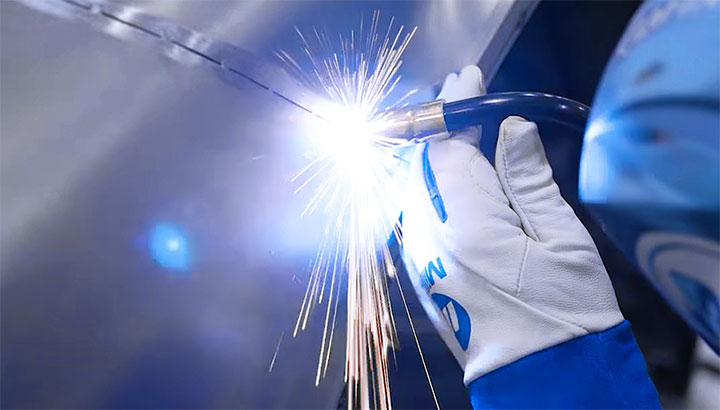
Common Welding Techniques in Sheet Metal Fabrication
MIG Welding (Gas Metal Arc Welding)
- Uses a continuous consumable wire electrode and shielding gas.
- Ideal for thicker sheet metals and structural applications.
- Advantage: Fast, versatile, suitable for automation.
- Limitation: Requires shielding gas → less effective outdoors.
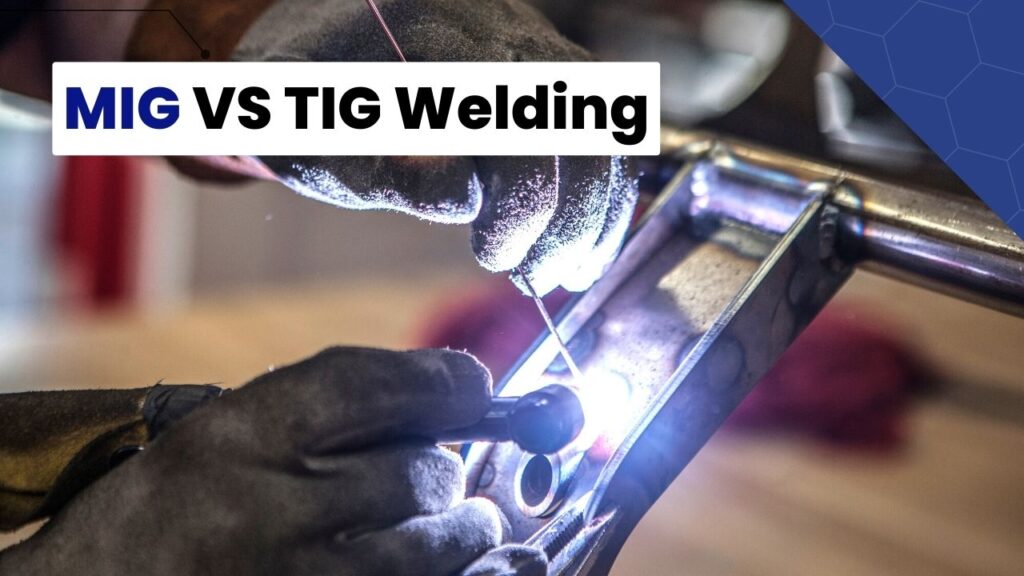
TIG Welding (Gas Tungsten Arc Welding)
- Uses a non-consumable tungsten electrode, filler rod optional.
- Known for high precision and clean welds.
- Advantage: Excellent for thin sheet metals and aesthetic welds.
- Limitation: Slower, requires skilled operators.
Spot Welding (Resistance Welding)
- Uses heat generated by electrical resistance at contact points.
- Widely applied in automotive sheet assemblies (e.g., car bodies).
- Advantage: Extremely fast, minimal distortion.
- Limitation: Limited to overlapping sheet joints.
Laser Welding
- High-energy laser beam fuses sheet metal with precision.
- Advantage: Minimal heat distortion, suitable for high-volume precision parts.
- Limitation: High equipment cost.
Arc Welding (Stick Welding)
- Traditional method using a consumable electrode.
- Advantage: Simple equipment, works in outdoor conditions.
- Limitation: Less precise, more spatter, requires post-weld finishing.
Comparative Table of Welding Techniques
| Welding Method | Best for | Advantages | Limitations | Typical Industries |
|---|---|---|---|---|
| MIG Welding | Medium to thick sheet metals | Fast, versatile, good penetration, compatible with automation | Sensitive to wind, needs shielding gas | Automotive, construction, industrial equipment |
| TIG Welding | Thin sheets, high-quality joints | Precise, aesthetic finish, no spatter | Slow, requires skilled labor | Aerospace, medical devices, custom fabrication |
| Spot Welding | Overlapping sheets | Fast, cost-efficient, minimal distortion | Limited to sheet joints only | Automotive (car bodies), appliances |
| Laser Welding | High-precision thin sheet parts | Very accurate, minimal heat distortion, automation-ready | Expensive equipment, operator expertise | Electronics, aerospace, medical |
| Arc Welding (Stick) | Outdoor and repair jobs | Inexpensive, portable, works without shielding gas | More spatter, less precision, requires finishing | Heavy machinery, construction |
Key Considerations for Welding in Sheet Metal Fabrication
- Material Type: Stainless steel vs. aluminum vs. carbon steel each require different welding methods.
- Sheet Thickness: TIG is preferred for thin sheets, MIG or Arc for thicker sections.
- Production Volume: Spot and laser welding excel in mass production; TIG suits low-volume, high-precision jobs.
- Aesthetic vs. Structural: Choose TIG or laser when weld appearance is critical.
Conclusion
Choosing the right welding technique in sheet metal fabrication is a balance of material, thickness, application requirements, and cost constraints.
- For mass production and automotive, spot welding and MIG welding are most efficient.
- For aerospace or medical industries, TIG and laser welding deliver unmatched precision.
- For construction and repair, arc welding remains cost-effective and reliable.
By aligning welding selection with design for manufacturability (DFM) principles, manufacturers can achieve optimal results in strength, efficiency, and quality.
What We Offer at Ze-tech Mold
At Ze-tech Mold, we provide end-to-end manufacturing services, including:
- CNC Machining & Turning
- 3D printing prototype
- sheet metal fabrication
- silicone vacuum casting
- Rapid Injection molding
- surface treatments
- PCB & PCBA
Whether you’re looking for precision CNC parts or custom prototypes, we provide tailored solutions for both low-volume and large-scale production. Get in touch with us today to discuss your project and see how we can bring your ideas to life.