
Introduction: Why Precision Matters in Electronics
In the fast-paced world of electronics manufacturing, CNC machining for electronic components plays a vital role. From smartphones and laptops to medical electronics and aerospace systems, the demand for miniaturized, high-precision parts is only increasing.
When tolerances are measured in microns, even the smallest error can lead to misalignment, overheating, or complete device failure. This is why CNC machining for electronics has become the go-to solution, offering both accuracy and scalability.
What Is CNC Machining in Electronics?
CNC (Computer Numerical Control) machining is a subtractive manufacturing process where materials are precisely cut and shaped using computer-controlled tools. In the electronics industry, CNC machining enables:
- Micron-level tolerances (±0.005 mm)
- High repeatability for mass production of small parts
- Wide material compatibility (metals, plastics, ceramics)
- Fast prototyping and production scalability
This combination makes CNC machining a critical technology for precision electronics manufacturing.
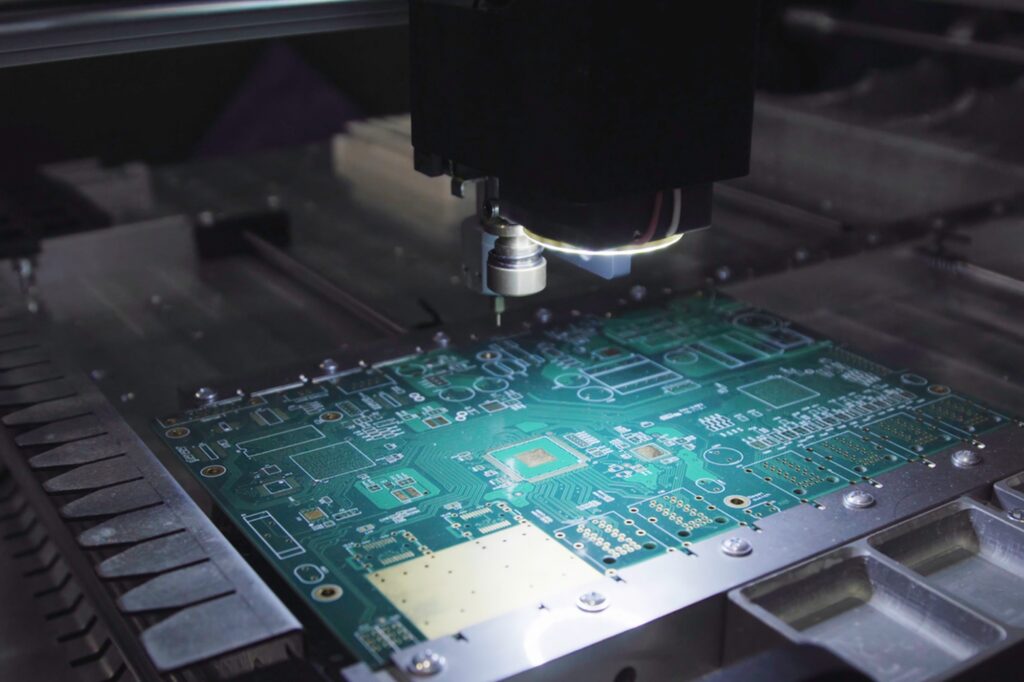
Applications of CNC Machining in Electronics
| Component | Function | CNC Role | Material Examples |
|---|---|---|---|
| Connector housings | Ensure electrical connectivity and stability | Precision machining for tight fits and small geometries | Brass, Copper, Aluminum |
| Heat sinks | Thermal management for chips and boards | CNC milling enables optimized fins and surface finishes | Aluminum, Copper |
| PCB prototypes | Mechanical support for circuit layouts | CNC routing of high-density layouts | FR4, Polycarbonate |
| Enclosures & casings | Protect sensitive electronics from impact/environment | CNC turning and milling for complex shapes | Aluminum alloys, ABS, Nylon |
| Micro fasteners & pins | Secure delicate assemblies | CNC lathes for ultra-small threads | Stainless steel, Titanium |
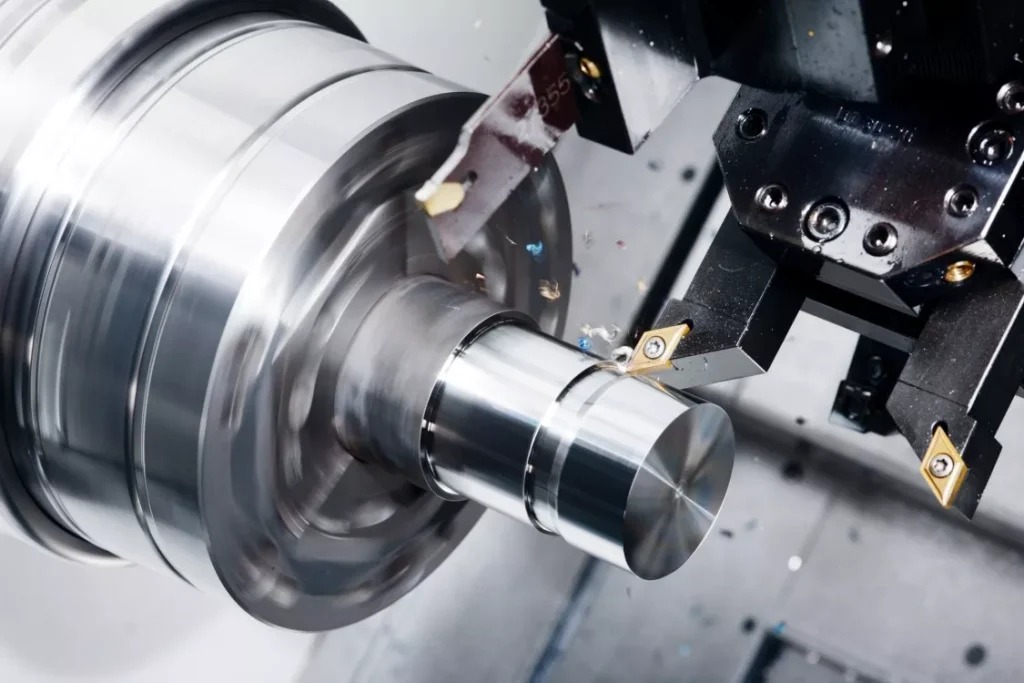
Tolerances and Surface Finishes for Electronics CNC Machining
| Feature | Typical Requirement | Reason | CNC Solution |
|---|---|---|---|
| Tolerance | ±0.005 mm to ±0.02 mm | Prevents misalignment and failure | Precision multi-axis CNC machining |
| Surface roughness (Ra) | 0.4–0.8 µm | Ensures electrical contact & smooth fits | Fine milling, polishing, anodizing |
| Edge quality | Burr-free edges | Prevents short circuits or cuts | Deburring, micro-milling, polishing |
| Thermal conductivity parts | Uniform thickness in heat sinks | Efficient heat dissipation | High-speed CNC milling |
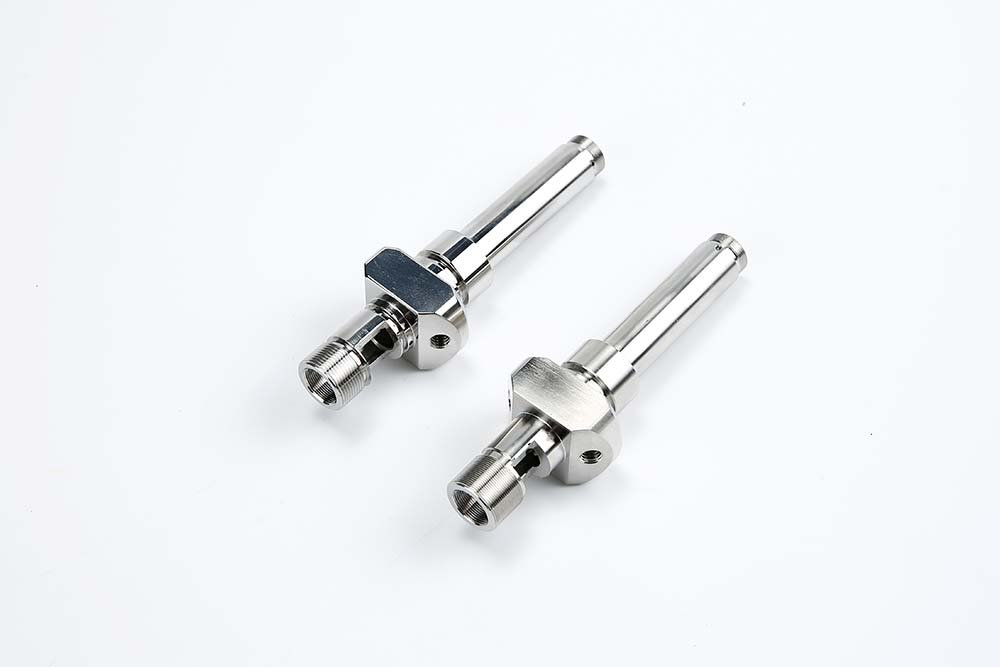
Challenges in CNC Machining for Electronics
While CNC machining brings unmatched precision, electronics manufacturers face several challenges:
- Miniaturization: The smaller the part, the higher the risk of tool wear and breakage.
- Material handling: Soft metals like copper can deform under cutting stress.
- Complex geometries: Multi-axis setups are often required for intricate electronic housings.
- Batch consistency: Thousands of micro-parts must maintain strict dimensional tolerances.

Best Practices for CNC Machining Electronics Parts
To maximize efficiency and cost-effectiveness, manufacturers should adopt DFM (Design for Manufacturability) principles for electronic components.
Key Recommendations:
- Optimize design for machinability → Avoid features smaller than tool diameter.
- Select the right material → Aluminum for heat sinks, ABS for lightweight casings, titanium for durability.
- Use micro tooling & advanced machines → Diamond-coated tools, 5-axis CNC for complex features.
- Integrate QC early → CMM, optical inspection, and in-line measurement systems.
- Surface treatments → Anodizing, passivation, or electropolishing to enhance conductivity and durability.
Conclusion: The Future of CNC in Electronics
As electronics continue to evolve toward smaller, faster, and more powerful devices, CNC machining will remain at the forefront of precision manufacturing. From micro-connectors to high-performance heat sinks, CNC machining ensures that small parts deliver big precision.
📩 Looking for CNC machining services for electronic components? Contact Ze-tech Mold today for micron-level accuracy and fast turnaround on your prototypes and production parts.