Introduction
The rise of digital twins is reshaping the way manufacturers approach product design, prototyping, and large-scale production. A digital twin is a virtual replica of a physical product, process, or system that continuously receives real-world data through IoT sensors, AI algorithms, and advanced simulation tools. This creates a powerful feedback loop that allows companies to predict performance, detect issues early, and optimize efficiency.
For prototyping and manufacturing, digital twins represent a major leap forward—offering shorter development cycles, lower costs, and higher precision.
What Is a Digital Twin?
A digital twin is more than just a 3D model. It integrates:
- Real-time data from sensors and machines
- Simulation environments that test product performance virtually
- Predictive analytics powered by AI and machine learning
- Closed-loop feedback that connects physical and digital environments
This enables manufacturers to prototype virtually before committing to expensive physical builds, while continuously improving designs based on operational insights.
Benefits of Digital Twins in Prototyping and Manufacturing
| Benefit | Application in Prototyping | Application in Manufacturing |
|---|---|---|
| Faster Development Cycles | Test multiple design iterations digitally without waiting for physical parts. | Speed up production line setup through virtual simulation. |
| Cost Reduction | Minimize material waste by validating designs digitally. | Detect inefficiencies in real-time and optimize resource use. |
| Improved Quality | Identify stress points, defects, or tolerance issues before physical build. | Ensure consistent performance with predictive maintenance. |
| Risk Mitigation | Simulate edge-case scenarios (heat, pressure, load) virtually. | Prevent costly downtime by forecasting failures in machinery. |
| Customization & Flexibility | Allow rapid product personalization before manufacturing. | Adapt production processes dynamically based on demand. |
Real-World Applications
- Automotive Industry – Digital twins simulate crash tests, aerodynamics, and powertrain performance, reducing the number of physical prototypes required.
- Aerospace – Boeing and Airbus leverage digital twins for engine health monitoring and predictive maintenance, improving safety and uptime.
- Medical Device Prototyping – Digital twins allow companies to model how implants or instruments perform under physiological conditions before real-world trials.
- Smart Factories – Production lines are mirrored digitally, enabling operators to experiment with workflow changes without disrupting operations.
Key Technologies Driving Digital Twins
- IoT (Internet of Things): Provides real-time sensor data from machines and products.
- AI & Machine Learning: Powers predictive modeling and intelligent decision-making.
- Cloud Computing: Enables scalable data storage and real-time collaboration.
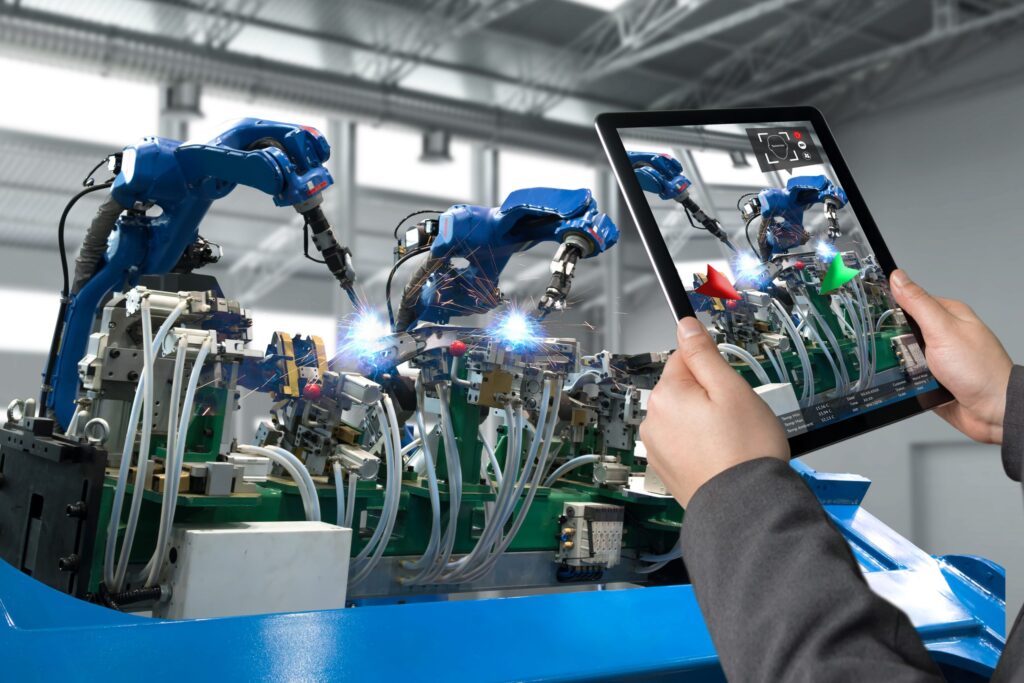
- AR/VR Integration: Allows engineers to visualize and interact with digital replicas.
Challenges and Considerations
While powerful, digital twins also introduce complexities:
- Data Security: Protecting sensitive manufacturing and product data from cyber threats.
- Integration Costs: Upfront investments in IoT, simulation platforms, and cloud infrastructure.
- Data Accuracy: Poor sensor quality or insufficient data can reduce the twin’s reliability.
Conclusion
Digital twins are not just a buzzword—they are a paradigm shift in how prototypes are designed and products are manufactured. By bridging the gap between the physical and digital worlds, digital twins allow manufacturers to predict, optimize, and innovate faster than ever before.
As industries continue to adopt AI, IoT, and cloud-driven platforms, the future of prototyping and manufacturing will be defined by virtual-first approaches. Companies that leverage digital twins effectively will enjoy shorter time-to-market, reduced costs, and stronger competitive advantages.
What We Offer at Ze-tech Mold
At Ze-tech Mold, we provide end-to-end manufacturing services, including:
- CNC Machining & Turning
- 3D printing prototype
- sheet metal fabrication
- silicone vacuum casting
- Rapid Injection molding
- surface treatments
- PCB & PCBA
Whether you’re looking for precision CNC parts or custom prototypes, we provide tailored solutions for both low-volume and large-scale production. Get in touch with us today to discuss your project and see how we can bring your ideas to life.