
Introduction
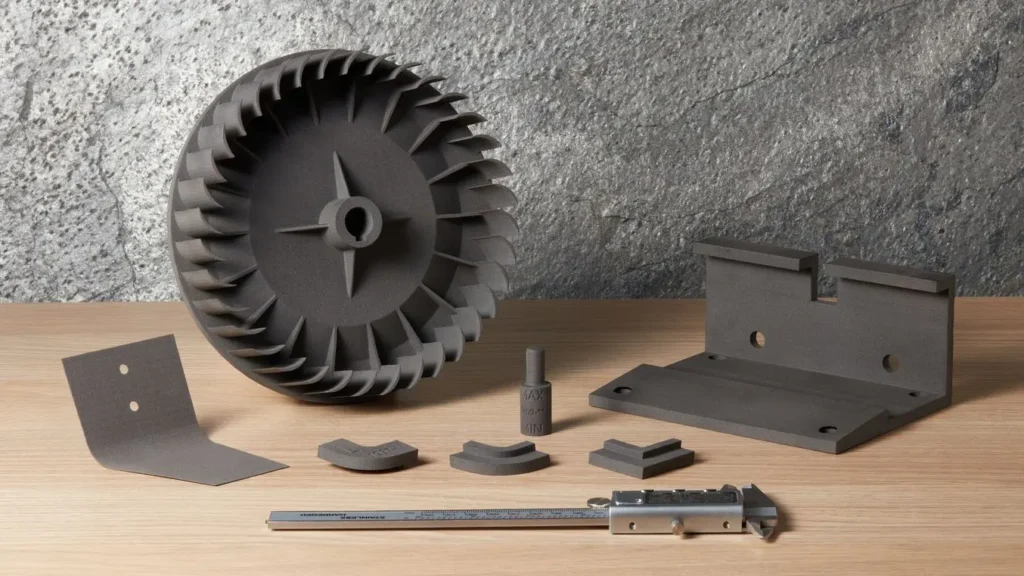
The aftermarket spare parts industry has long relied on traditional manufacturing and centralized warehousing to ensure availability. However, this model often struggles with long lead times, high inventory costs, and obsolescence issues. 3D printing (Additive Manufacturing, AM) is transforming how spare parts are designed, produced, and distributed, enabling more flexible, cost-efficient, and sustainable supply chains.
Key Benefits of 3D Printing in Spare Parts
- On-Demand Manufacturing – Reduces the need for large warehouses by producing parts only when needed.
- Decentralized Production – Parts can be printed near the point of use, minimizing logistics costs and delays.
- Customization and Legacy Support – Easier reproduction of discontinued or low-volume spare parts.
- Reduced Lead Time – From weeks or months to hours or days.
- Sustainability – Less waste, lower transportation emissions, and optimized material usage.
Comparative Table: Traditional vs. 3D Printing in Spare Parts
| Aspect | Traditional Spare Parts Supply | 3D Printing for Spare Parts |
|---|---|---|
| Lead Time | Weeks to months (tooling + shipping) | Hours to days (on-demand printing) |
| Inventory Costs | High (warehousing & obsolescence) | Low (digital inventory, print when needed) |
| Production Flexibility | Limited, requires tooling changes | High, no tooling required |
| Supply Chain Resilience | Vulnerable to disruptions (transport, global sourcing) | Localized, decentralized production |
| Part Customization | Difficult and expensive | Easy digital design modification |
| Sustainability | High waste, large carbon footprint | Reduced waste, localized production |
Industry Applications
- Aerospace & Defense – Rapid production of mission-critical spare parts in remote locations.
- Automotive – Printing rare or discontinued parts for aftermarket service.
- Medical Devices – On-demand production of customized components for hospital equipment.
- Industrial Machinery – Avoiding downtime by quickly manufacturing replacement parts.
Challenges and Considerations
While promising, 3D printing for spare parts still faces:
- Material Limitations – Not all industrial-grade materials are printable yet.
- Certification & Compliance – Especially in aerospace and medical sectors.
- Cost Trade-offs – Economical for low-volume/high-value parts, less so for mass production.
- IP & Digital Security – Protecting digital part files from piracy or tampering.
Future Outlook
The rise of digital spare parts libraries, AI-driven demand forecasting, and blockchain for file authentication will accelerate the adoption of 3D printing in spare parts supply chains. As technology matures, companies will increasingly shift from physical stockpiling to digital inventories, reducing waste and improving resilience.
Conclusion
3D printing is not merely a tool for prototyping—it is a strategic enabler for reshaping aftermarket supply chains. By enabling on-demand, decentralized, and sustainable spare parts production, manufacturers can improve service efficiency, reduce costs, and future-proof their supply chains against disruptions.
What We Offer at Ze-tech Mold
At Ze-tech Mold, we provide end-to-end manufacturing services, including:
- CNC Machining & Turning
- 3D printing prototype
- sheet metal fabrication
- silicone vacuum casting
- Rapid Injection molding
- surface treatments
- PCB & PCBA
Whether you’re looking for precision CNC parts or custom prototypes, we provide tailored solutions for both low-volume and large-scale production. Get in touch with us today to discuss your project and see how we can bring your ideas to life.