
In today’s manufacturing landscape, sustainability isn’t just a buzzword—it’s a necessity. With the global CNC machining market projected to exceed $100 billion by 2025, industries are under pressure to adopt green practices that reduce environmental impact while maintaining efficiency. At ZE-TECH MOLD, we specialize in precision CNC machining and mold services that emphasize waste minimization, helping businesses achieve eco-friendly production without compromising quality. In this guide, we’ll dive into proven techniques for minimizing waste in CNC operations, drawing from the latest industry insights to optimize your processes for a greener future.
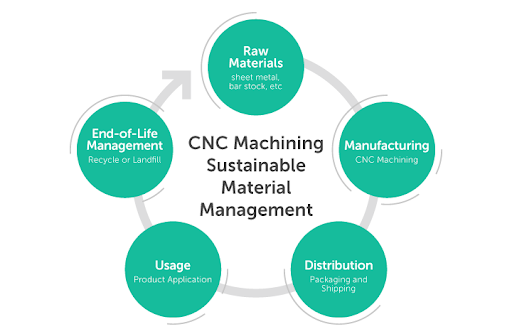
Sustainability in CNC Machining Lifecycle: Visualizing waste reduction from design to recycling.
Why Waste Minimization Matters in Green CNC Machining
Waste in CNC machining—such as excess material shavings, coolant runoff, and energy overuse—not only increases costs but also contributes to environmental degradation. By implementing waste minimization techniques, manufacturers can cut material usage by up to 20-30%, lower energy consumption, and support circular economy principles. This shift is crucial in 2025, as regulations tighten and consumers demand sustainable products. Techniques like optimized parameters and recycling are transforming CNC from a resource-intensive process into an eco-friendly powerhouse.

Illustration of sustainable machining impacts, highlighting waste reduction strategies.
1. Optimize Machining Parameters for Precision and Efficiency
One of the most effective ways to minimize waste is by fine-tuning CNC machining parameters, such as spindle speed, feed rate, and depth of cut. This approach reduces material removal inefficiencies and energy use, leading to less scrap. For instance, using simulation software to test parameters beforehand can prevent over-machining and extend tool life. At ZE-TECH MOLD, we integrate these optimizations in our services to deliver parts with minimal waste—contact us at www.zetechmold.com to learn how we can apply this to your projects.
2. Leverage Nesting Software for Maximum Material Utilization
Nesting software arranges parts on raw material sheets to minimize gaps and offcuts, often achieving 90%+ material efficiency. Advanced CAD/CAM integration and real-time inventory management further enhance this by predicting and adapting to stock variations. In automotive and aerospace applications, this technique has proven invaluable for recycling metal waste and reducing overall consumption. Implementing nesting in your CNC workflow not only cuts costs but also aligns with 2025’s green manufacturing trends.

Diagram of sustainable CNC operations, showing waste minimization flows.
3. Implement Recycling and Reuse Systems
Recycling metal scraps and coolants is a cornerstone of green CNC. By prioritizing material recycling, shops contribute to a circular economy where waste is repurposed into new raw materials. Techniques include on-site filtration systems for coolants and partnerships with recycling facilities for metals like aluminum and steel. This not only minimizes landfill contributions but also reduces the need for virgin materials, making it a win for both the environment and your bottom line.
4. Adopt Advanced Tool Paths and Precision Cutting
Optimized tool paths, powered by AI-driven software, ensure precise cuts that eliminate unnecessary material removal. In 2025, features like adaptive machining adjust paths in real-time to avoid waste from tool wear or vibrations. Combining this with energy-efficient CNC machines further amplifies savings. For industries like automotive, these methods are essential for sustainable prototyping and production.
5. Integrate Green Technologies and Energy-Efficient Practices
The future of CNC lies in eco-friendly tech, such as low-energy spindles and hybrid systems that incorporate 3D printing for waste reduction. Minimizing waste also involves broader practices like using biodegradable coolants and monitoring energy usage with IoT sensors. As we move into 2025, adopting these innovations positions manufacturers as leaders in sustainable CNC machining.
Conclusion: Partner with ZE-TECH MOLD for Green CNC Solutions
Minimizing waste in CNC machining is achievable through strategic optimizations, recycling, and cutting-edge tools. By adopting these techniques, you can reduce your environmental footprint while boosting efficiency and profitability. At ZE-TECH MOLD, we’re committed to delivering sustainable CNC and mold solutions tailored to your needs. Visit www.zetechmold.com today to explore our services and start your journey toward greener manufacturing. For more insights on sustainable practices, subscribe to our blog!