
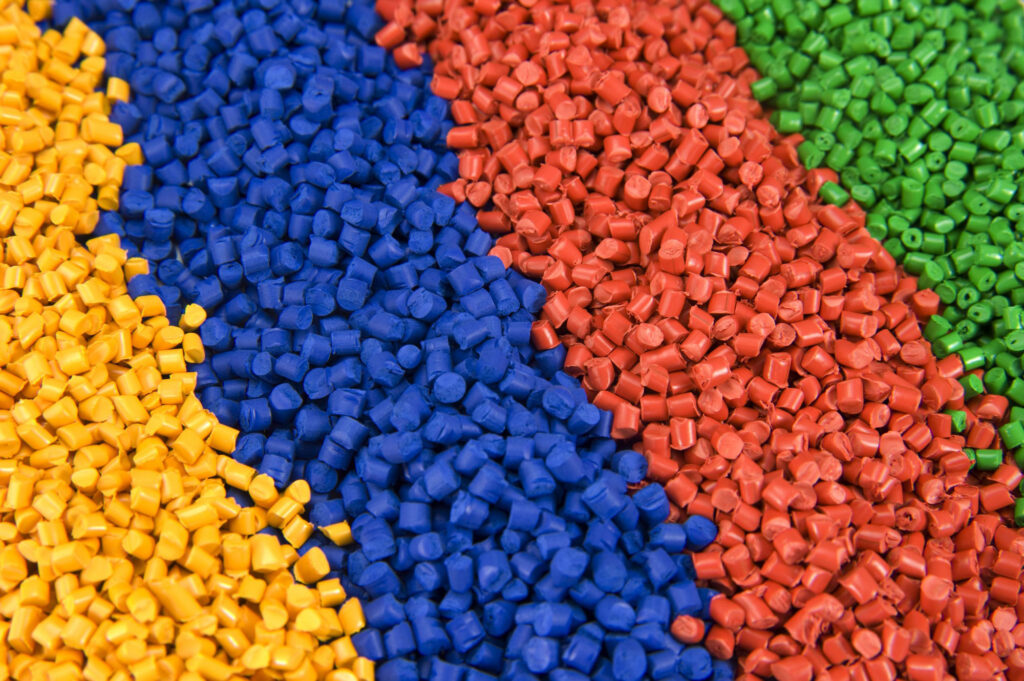
In plastic injection molding, the choice of resin directly determines the mechanical properties, thermal performance, dimensional stability, and cost efficiency of the final product. While mold design and processing conditions are critical, material selection often has the greatest long-term impact on product performance and lifecycle costs.
This guide provides a technical overview of the most common thermoplastics used in injection molding, including their key properties, design considerations, and application-specific recommendations.
1. ABS (Acrylonitrile Butadiene Styrene)
- Mechanical Properties:
- Tensile Strength: ~40–50 MPa
- Impact Resistance (Izod): ~200 J/m
- Thermal Properties: Heat Deflection Temp (HDT) ~85–100°C
- Processing Considerations:
- Easy flow, good dimensional stability
- Requires careful control of drying (moisture sensitive)
- Applications: Automotive dashboards, electronic housings, power tool casings
- Notes: Excellent balance of toughness and processability; limited UV resistance without additives.
2. Polypropylene (PP)
- Mechanical Properties:
- Tensile Strength: ~30–40 MPa
- Flexural Modulus: ~1500 MPa
- Thermal Properties: Melting Point ~160–170°C
- Processing Considerations:
- Very low density (0.90 g/cm³ → lightweight)
- High shrinkage (1–2.5%) → requires design compensation
- Applications: Medical syringes, food containers, automotive bumpers
- Notes: Outstanding chemical resistance, fatigue strength (“living hinges”), but lower temperature tolerance.
3. Polycarbonate (PC)
- Mechanical Properties:
- Tensile Strength: ~60–70 MPa
- Impact Resistance: up to 900 J/m
- Thermal Properties: HDT ~135°C
- Processing Considerations:
- High melt viscosity, requires high injection pressures
- Must be dried before molding
- Applications: Safety helmets, eyewear lenses, electrical housings
- Notes: High toughness and transparency; prone to scratching, requires coatings for optical use.
4. Nylon (Polyamide, PA6 / PA66)
- Mechanical Properties:
- Tensile Strength: ~70–80 MPa
- Excellent wear resistance and fatigue strength
- Thermal Properties: Melting Point: 220–265°C (grade dependent)
- Processing Considerations:
- Strong moisture absorption (up to 3–5% by weight) → affects dimensional stability
- Requires drying before molding
- Applications: Gears, bushings, bearings, automotive under-the-hood components
- Notes: Excellent balance of strength and toughness, but property shifts with humidity.
5. High-Performance Engineering Plastics (PEEK, PPS, POM)
- PEEK:
- Tensile Strength: ~90–100 MPa
- HDT > 250°C
- Used in aerospace, medical implants, oil & gas
- PPS:
- Excellent chemical resistance
- Continuous use temperature >200°C
- POM (Acetal):
- Low friction, high stiffness
- Used in precision gears and mechanical parts
Comparative Table of Common Injection Molding Materials
| Material | Tensile Strength (MPa) | Heat Deflection Temp (°C) | Shrinkage (%) | Key Advantage | Typical Applications |
|---|---|---|---|---|---|
| ABS | 40–50 | 85–100 | 0.4–0.7 | Good toughness, easy processing | Automotive, electronics |
| PP | 30–40 | 50–70 | 1.0–2.5 | Lightweight, chemical resistance | Packaging, medical, automotive |
| PC | 60–70 | 135 | 0.5–0.7 | High impact, optical clarity | Safety gear, electronics, lenses |
| PA (Nylon) | 70–80 | 180–200 | 0.8–2.0 | Wear resistance, strength | Gears, bearings, automotive |
| PEEK | 90–100 | 250+ | 1.2–1.8 | High performance, extreme temp | Aerospace, medical, oil & gas |
Key Considerations in Material Selection
When choosing a resin for injection molding, engineers must evaluate:
- Mechanical Requirements: load-bearing capacity, impact resistance, fatigue strength.
- Thermal Stability: continuous service temperature, short-term peak loads.
- Chemical Exposure: solvents, oils, acids, or cleaning agents in the environment.
- Dimensional Tolerance: shrinkage rates, warpage potential, and moisture absorption.
- Aesthetic Needs: transparency, gloss, surface finish, colorability.
- Regulatory Compliance: FDA, RoHS, UL flame ratings, biocompatibility.
- Cost vs. Performance: balancing raw material price with functional demands.
Conclusion
Selecting the right injection molding material requires a balance between performance, processing behavior, and cost efficiency. ABS and PP are versatile for consumer and automotive products, while PC and Nylon offer enhanced toughness and wear resistance. For demanding applications, high-performance plastics like PEEK and PPS provide unmatched durability and thermal stability.
What We Offer at Ze-tech Mold
At Ze-tech Mold, we provide end-to-end manufacturing services, including:
- CNC Machining & Turning
- 3D printing prototype
- sheet metal fabrication
- silicone vacuum casting
- Rapid Injection molding
- surface treatments
- PCB & PCBA
Whether you’re looking for precision CNC parts or custom prototypes, we provide tailored solutions for both low-volume and large-scale production. Get in touch with us today to discuss your project and see how we can bring your ideas to life.