In modern manufacturing, design complexity is no longer a limitation — it’s an opportunity. As industries such as aerospace, medical, and automotive demand components with tighter tolerances and intricate shapes, 5-axis CNC machining has become the go-to solution for creating parts that were once deemed impossible. This technology extends far beyond the capabilities of traditional 3-axis systems, offering unparalleled precision, flexibility, and efficiency.
Understanding Complex Geometries
Complex geometries refer to parts featuring curved surfaces, undercuts, compound angles, or multi-directional features that cannot be accessed from a single direction. Examples include:
- Turbine blades with twisted profiles
- Orthopedic implants with organic curvature
- Mold cavities with deep recesses
- Lightweight structural components with internal channels
Such designs require machining access from multiple orientations — which is where 5-axis machining excels.
What Is 5-Axis CNC Machining?
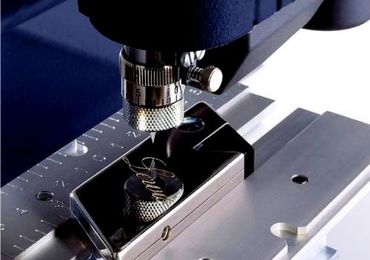
Unlike 3-axis machines (which move in X, Y, and Z directions), a 5-axis machine adds two additional rotational axes — A and B — enabling the cutting tool to approach the workpiece from virtually any angle.
This multi-directional capability allows manufacturers to machine complex shapes in a single setup, reducing repositioning errors and improving dimensional accuracy.
Advantages of 5-Axis CNC Machining
| Aspect | 3-Axis CNC Machining | 5-Axis CNC Machining |
|---|---|---|
| Movement | 3 linear axes (X, Y, Z) | 3 linear + 2 rotational (A, B) |
| Setup Time | Multiple setups required | Single setup for most geometries |
| Surface Finish | More tool marks due to repositioning | Smoother finish from continuous tool paths |
| Accuracy | Accumulative errors possible | Higher precision due to fewer setups |
| Design Complexity | Limited to accessible faces | Almost unlimited geometry freedom |
Expanding Design Freedom
5-axis technology gives designers greater creative and functional freedom. Instead of designing around machining limitations, engineers can focus on the optimal geometry for performance.
For instance:
- Aerospace: Lightweight brackets and impellers with complex internal channels.
- Medical: Custom implants and surgical tools matching patient anatomy.
- Automotive: Engine components optimized for aerodynamics and weight reduction.
By removing the need for compromise, 5-axis CNC machining bridges the gap between concept and manufacturability.
Challenges and Best Practices
While 5-axis machining offers huge benefits, it also comes with technical challenges:
- Programming complexity – Requires advanced CAM software and simulation.
- Tool interference – Must consider tool orientation and collision avoidance.
- Machine calibration – Precision alignment and tool length compensation are critical.
- Operator expertise – Skilled machinists are essential to leverage full potential.
Best practices include using digital twins, verifying toolpaths with simulation, and employing shorter cutting tools to reduce vibration and improve accuracy.
Conclusion
The integration of 5-axis CNC machining represents a leap forward in the evolution of precision manufacturing. By enabling designers to machine complex geometries with exceptional accuracy and efficiency, it empowers industries to innovate freely — where form and function coexist without limitation.
Whether for aerospace turbines, medical implants, or automotive molds, 5-axis machining stands as a cornerstone technology for next-generation manufacturing.