
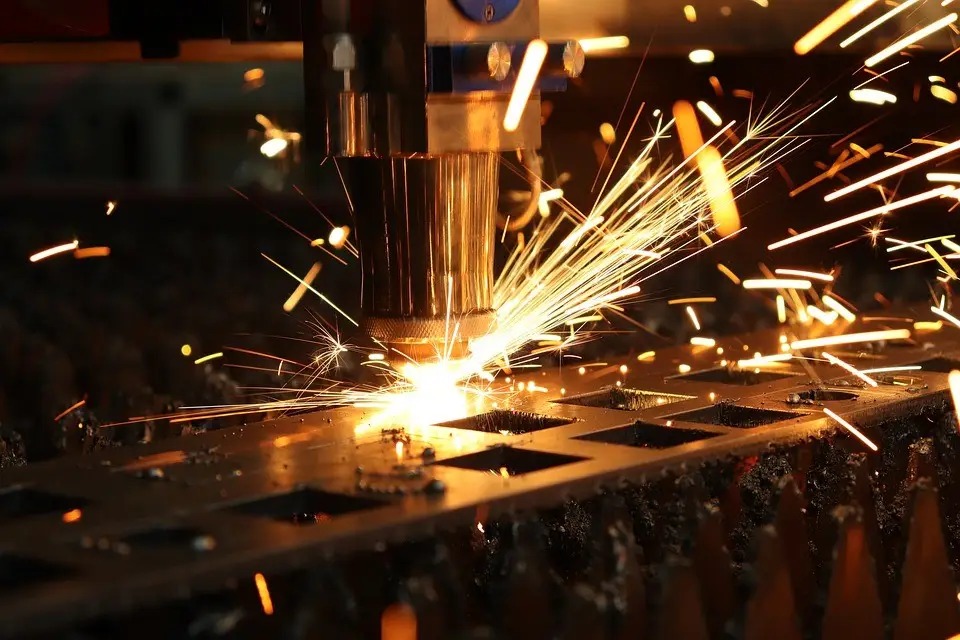
In sheet metal fabrication, precision and efficiency are essential for meeting client demands across industries such as automotive, aerospace, construction, and electronics. Among the most common cutting techniques, laser cutting and plasma cutting stand out as two distinct processes, each offering unique advantages and limitations. Choosing between them depends on material type, thickness, accuracy requirements, and project cost.
What Is Laser Cutting?
Laser cutting uses a highly focused beam of light to melt, burn, or vaporize material along a precise path. The process is controlled by CNC machines, ensuring extreme accuracy and repeatability.
Key Features of Laser Cutting:
- Precision tolerance up to ±0.1 mm
- Suitable for thin to medium sheet metals (0.5 mm – 25 mm depending on material)
- Clean edges with minimal finishing required
- Best for complex geometries and intricate designs
What Is Plasma Cutting?
Plasma cutting relies on an accelerated jet of hot plasma to cut through conductive metals. It is a robust process widely used for cutting thicker materials at higher speeds.
Key Features of Plasma Cutting:
- Cuts through thick metals (up to 50 mm and more)
- Faster cutting speed compared to laser for heavy plates
- Lower equipment and operational costs
- Rougher edges, usually requiring secondary finishing
Advantages of Laser Cutting
- Exceptional accuracy and edge quality
- Minimal heat-affected zones (HAZ)
- Ideal for prototypes and high-precision industries (e.g., aerospace, medical devices)
- Excellent for automation and small intricate components
Advantages of Plasma Cutting
- Highly effective for cutting thick and heavy-duty metals
- Faster throughput on structural steel
- Cost-effective for large-scale fabrication
- Durable and suitable for outdoor/on-site cutting
Laser Cutting vs. Plasma Cutting: Side-by-Side Comparison
| Criteria | Laser Cutting | Plasma Cutting |
|---|---|---|
| Cutting Thickness | Best for thin to medium sheets (0.5–25 mm) | Best for thick plates (up to 50 mm+) |
| Precision | Very high (±0.1 mm) | Moderate (±0.5 mm) |
| Edge Quality | Smooth, minimal finishing | Rougher, requires grinding/finishing |
| Speed | Slower on thick materials | Faster on thicker materials |
| Cost | Higher setup and operating cost | More cost-effective for bulk cutting |
| Applications | Aerospace, electronics, medical devices | Construction, heavy machinery, shipbuilding |
Conclusion
Both laser cutting and plasma cutting play critical roles in modern sheet metal fabrication. If your project requires high precision, intricate designs, and minimal finishing, laser cutting is the ideal choice. On the other hand, if you need fast, cost-efficient cutting for thick materials, plasma cutting is more suitable.
What We Offer at Ze-tech Mold
At Ze-tech Mold, we provide end-to-end manufacturing services, including:
- CNC Machining & Turning
- 3D printing prototype
- sheet metal fabrication
- silicone vacuum casting
- Rapid Injection molding
- surface treatments
- PCB & PCBA
Whether you’re looking for precision CNC parts or custom prototypes, we provide tailored solutions for both low-volume and large-scale production. Get in touch with us today to discuss your project and see how we can bring your ideas to life.