
Introduction
Brass is one of the most widely used metal alloys in modern manufacturing. Known for its excellent machinability, corrosion resistance, electrical conductivity, and aesthetic golden appearance, brass plays a crucial role in industries such as electronics, automotive, hardware, plumbing, robotics, musical instruments, and precision machining.
This guide explores the properties, advantages, applications, processing methods, and selection considerations of brass as a manufacturing material.
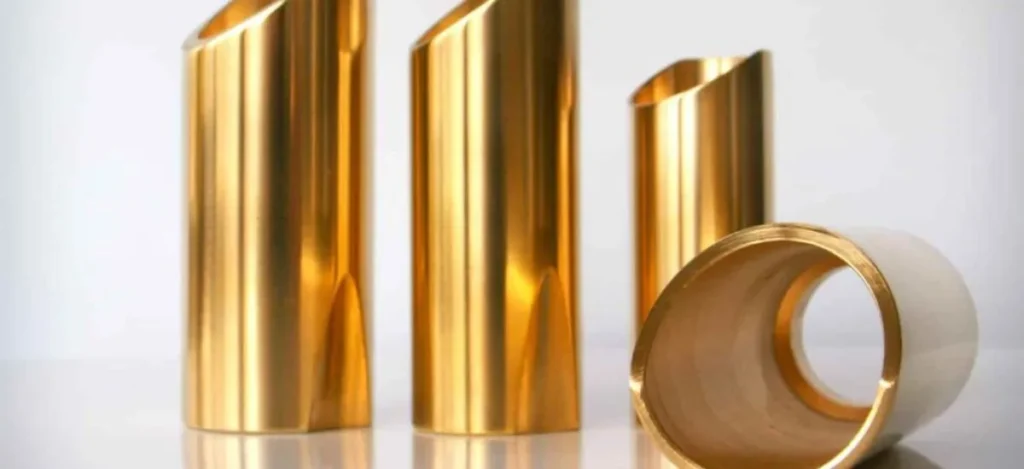
1. What Is Brass?
Brass is an alloy composed primarily of copper (Cu) and zinc (Zn), with zinc content typically ranging from 5% to 45% depending on the grade.
- Higher zinc → higher strength, lower cost
- Higher copper → better corrosion resistance and conductivity
Common brass alloys include:
- C260 (Cartridge Brass) – 70% Cu, 30% Zn
- C360 (Free-Cutting Brass) – Ideal for CNC machining
- C268 (Yellow Brass) – Decorative parts
- C272 (Riveting Brass) – Good cold workability
2. Key Mechanical & Physical Properties
| Property | Brass Performance |
|---|---|
| Density | ~8.4–8.7 g/cm³ |
| Tensile Strength | 250–550 MPa (depending on grade) |
| Hardness | HB 50–160 |
| Electrical Conductivity | ~28% IACS |
| Thermal Conductivity | High |
| Corrosion Resistance | Excellent, especially in water and atmosphere |
| Machinability | ★★★★★ (C360 is among the best-machining metals) |
Why these properties matter:
- High machinability helps reduce CNC cutting time and tool wear.
- Good strength and corrosion resistance make brass ideal for structural + aesthetic components.
- Electrical conductivity allows brass to be used in connectors and terminals.
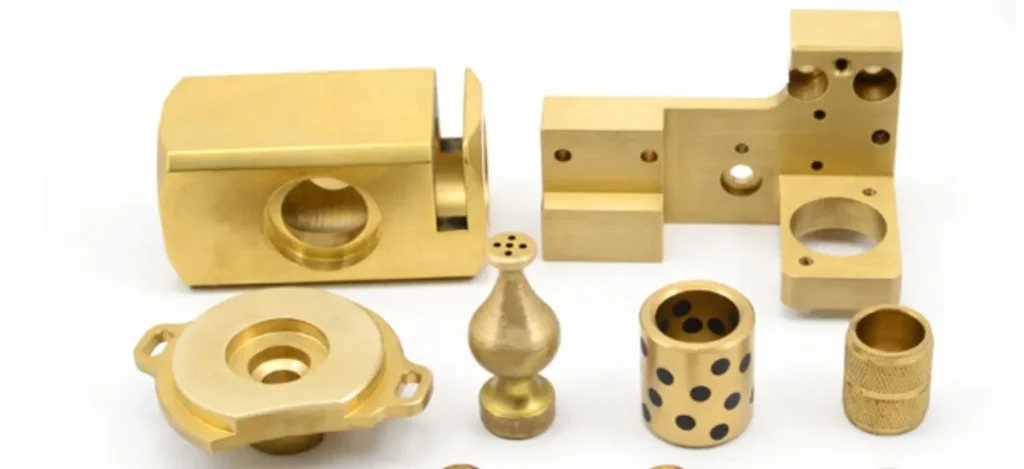
3. Advantages of Using Brass in Manufacturing
3.1 Excellent Machinability
Brass—especially C360—is known as the “standard of machinability” because:
- Cutting is smooth, with less tool vibration
- Chips break easily
- Allows high-speed milling and turning
This reduces cost and increases production efficiency.
3.2 Corrosion Resistance
Brass forms a natural protective layer, making it suitable for:
- Marine environments
- Water systems
- Outdoor hardware
3.3 Aesthetic Appearance
Its natural golden color is ideal for decorative components, luxury parts, and architectural hardware.
3.4 High Electrical Conductivity
Although not as conductive as pure copper, brass’s conductivity is sufficient for electrical connectors and terminals.
3.5 Antimicrobial Properties
Brass can naturally inhibit microbial growth, making it suitable for medical and sanitary equipment.
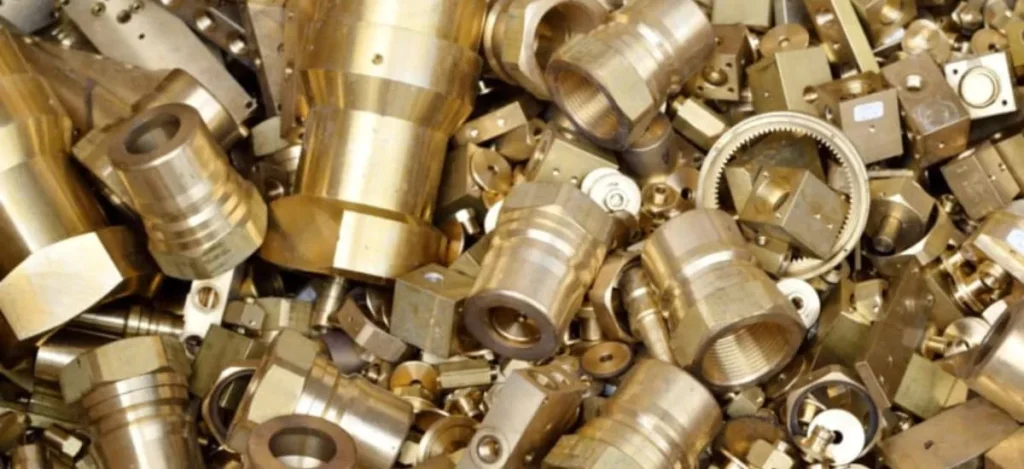
4. Common Applications of Brass
4.1 CNC Machining Components
- Precision connectors
- Bushings & bearings
- Valve bodies
- Shafts and gears
C360 is widely used for turned parts due to its high machinability.
4.2 Electronics & Electrical Components
- Terminals
- Switch parts
- Battery connectors
- Heat dissipation components
4.3 Plumbing & Fluid Systems
Brass is the standard material for:
- Pipe fittings
- Water valves
- Flow control components
4.4 Decorative & Architectural Hardware
- Door handles
- Hinges
- Luxury fasteners
- Musical instruments (e.g., trumpets)
4.5 Robotics & Automation
- Sensor mounts
- Custom brass inserts
- Precision bushings for low-friction motion
5. Manufacturing Methods for Brass Components
5.1 CNC Machining
- Suitable for C360, C220, C272
- Holds tight tolerances (±0.01 mm)
- Produces smooth surface finish (Ra 0.2–0.8 μm)
5.2 Casting
Used for large or complex parts:
- Valve bodies
- Pump housings
- Decorative hardware
5.3 Stamping & Bending
Applicable for thinner brass sheets:
- Electronic contacts
- Small brackets
- Shielding components
5.4 Hot Forging
Used for high-strength performance parts.
6. Surface Finishes for Brass Parts
| Finish Type | Benefits |
|---|---|
| Polishing | Mirror-like finish |
| Electroplating (Nickel, Chrome, Gold) | Improved durability & aesthetics |
| Passivation | Enhanced corrosion resistance |
| Sandblasting | Matte & uniform texture |
| Clear coating | Prevents oxidation (keeps color shiny) |
7. How to Choose the Right Brass Grade
Choose C360 If:
- You need tight tolerances
- High-volume CNC turning/milling
- Lowest machining cost
Choose C260 / C268 If:
- You need good formability (bending/stamping)
Choose Lead-Free Brass (e.g., C680, C693) If:
- Used in drinking-water systems
- Required by RoHS / REACH compliance
Conclusion
Brass is one of the most versatile and reliable metals in manufacturing. With its excellent machinability, corrosion resistance, beautiful appearance, and strong physical properties, brass remains a top choice for CNC machining, electronics, plumbing, robotics, and decorative applications.
Choosing the right brass grade and processing method ensures durability, performance, and manufacturing efficiency in modern engineering projects.