
Surface treatment is a critical step in turning a fabricated metal component into a functional, durable, and attractive product. The right finish affects corrosion resistance, wear, aesthetics, adhesion of secondary coatings, and regulatory compliance. This article compares three widely used finishes—anodizing, powder coating, and mechanical polishing—from an engineering perspective, summarizes their process windows and trade-offs, and gives practical DFM and QC guidance for production.
Quick overview of the three processes
Anodizing (conversion coating)
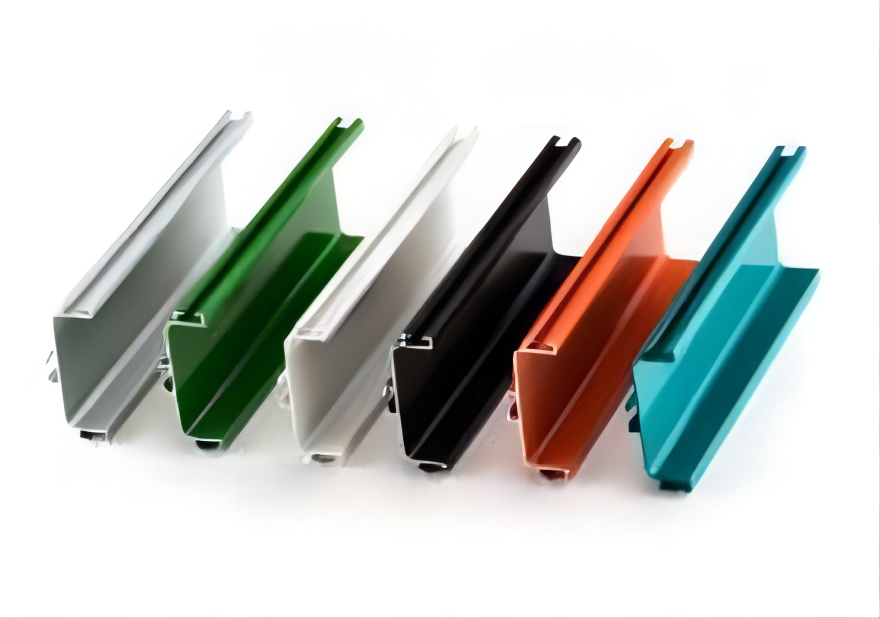
Anodizing is an electrochemical conversion of the metal surface (commonly aluminum) that grows a controlled oxide layer directly on the substrate. It increases corrosion resistance, surface hardness and—when dyed—provides durable color. Typical decorative (Type II) anodic layers are thin (≈5–25 μm), while hard/anodic (Type III) coatings used for wear resistance are substantially thicker (commonly 25–100+ μm).
When to use: aluminum parts requiring long-term UV stability, abrasion resistance, or when a metal, integral-looking finish is preferred (architectural trim, heat sinks, housings).
Powder coating (organic coating)
Powder coating is a thermally-cured, dry powder applied (electrostatically) to a prepared substrate and then cured in an oven to form a continuous polymer film. Typical dry film thicknesses for general industrial use are about 50–125 μm (2–5 mils), though specs vary by application. Powder coating provides excellent color variety, uniformity, and relatively low per-part cost at scale.
When to use: parts that need a wide color palette, robust corrosion protection at competitive cost, or a textured/paint-like finish (appliance panels, outdoor furniture, enclosures).
Mechanical polishing (and buffing / mirror finishing)
Polishing is a mechanical material removal/abrasion sequence (sanding → polishing → buffing) to reduce roughness and produce satin or mirror surfaces. Achieving mirror finishes typically requires progressive grit sequences (coarse → medium → fine → ultra-fine) often finishing at P800–P2000 or with micron-level polishing compounds depending on substrate and desired gloss.
When to use: aesthetic components with visible metal surfaces (consumer products, luxury trim), optical surfaces, and when the metal look (no coating) is required.
Engineering trade-offs — concise table
| Feature / Metric | Anodizing | Powder Coating | Polishing (Mechanical) |
|---|---|---|---|
| Typical thickness | 5–25 µm (Type II) ; 25–100+ µm (Type III / hardcoat). | 50–125 µm typical; architectural/industrial ranges vary 50–150 µm. | Material removal; no film thickness; finish defined by Ra and gloss. |
| Substrate compatibility | Primarily aluminum (some processes for Ti, Mg) | Most metals (steel, aluminum, galvanized) after pre-treatment | Any metal—polishability varies by alloy (stainless steels polish best) |
| Corrosion resistance | Good (especially sealed anodize) | Excellent with right chemistry and thickness | None intrinsically; may require clearcoat or passivation |
| UV/Color stability | Excellent for dye+sealed anodize | Good, but organic pigments may fade long-term outdoors | N/A (metallic surface) |
| Scratch & wear resistance | High (hard anodize > powder in abrasion) for Type III | Good, but can chip or scratch on impact | Surface can scratch; polishing removes defects but is not protective |
| Repairability | Localized repair difficult (re-anodize needed) | Local repairs practical (touch-up powders/paints) | Re-polish or buff local areas |
| Typical lead time (lab/short runs) | Moderate (bath processing + sealing) | Fast (spray/curing lines) | Fast (mechanical/hand work) |
| Relative cost (per-part) | Medium–High (process & equipment) | Low–Medium (efficient at volume) | Variable (labor-intensive for mirror finish) |
Notes: table values are typical ranges; exact selection depends on alloy, geometry, and environmental spec. Sources: anodizing/powder thickness and comparisons.
Process details & production considerations
Surface preparation (the most important step)
All three finishes rely on clean, correctly prepared substrates. Typical sequence includes degreasing, alkaline cleaning, acid etch or chemical conversion (for powder coating and anodizing), and, where appropriate, conversion coatings (e.g., zinc phosphate for steel) prior to powder or polishing. Poor pretreatment is the root cause of adhesion failure, blistering, and premature corrosion. Best practice: define a documented pre-treatment recipe per alloy and hold incoming-material acceptance tests.
(Reference process & best-practice guides for conversion coatings and pre-treatment).
Anodizing: process control & design implications
- Current density, bath temperature and chemistry, and time control oxide thickness and pore structure. Hard anodize requires lower temperatures and higher voltages.
- DFM tips: avoid trapping of electrolyte in deep pockets (blind holes), provide radii on edges to avoid premature breakdown, and consider post-anodize dimensional allowances—oxide growth consumes aluminum (anodize builds up into pores and can change dimensions). For dyeing, 10–15 µm is common for effective coloration.
Powder coating: process control & design implications
- Key variables: pretreatment (clean/etch/chem film), powder chemistry, electrostatic application, cure profile (time × temperature), and film thickness. Thickness control is critical—too thin = poor protection; too thick = runs, cracking or incomplete curing. Typical targets ≈50–125 µm for general use.
- DFM tips: design for uniform film build—avoid deep recesses that trap powder, allow adequate edge clearance for coating thickness, and specify masking if threads or machined fits must remain uncoated. Use sacrificial masking plugs for threaded holes.
Polishing: process control & design implications
- Sequence & abrasives: start with coarse grit for shape correction, then progressively finer grits; final buffing compounds deliver mirror gloss. The exact grit progression depends on material and initial roughness; industrial mirror finishes commonly pass through P120 → P240 → P400 → P800 → fine buffing.
- DFM tips: avoid small recessed features that are difficult to polish consistently; consider electropolishing for internal surfaces where mechanical polishing can’t reach (particularly stainless steels).
Quality control & testing (practical checklist)
- Adhesion tests: cross-hatch tape test (qualitative) or pull-off adhesion tests (quantitative) for coatings.
- Thickness measurement: non-destructive gauges (magnetic/eddy-current) for powder coating; anodize thickness measured by eddy-current or destructive cross-section for validation.
- Salt spray / corrosion testing: accelerated testing to compare system performance vs spec.
- Surface roughness (Ra): quantify before and after finishing for function/optics.
- Color & gloss measurement: spectrophotometer and gloss-meter for aesthetic control.
Environmental, safety & regulatory considerations
- Anodizing uses acid baths (sulfuric/chromic) and generates rinse waters that require treatment. Chromic anodizing is increasingly restricted due to hexavalent chromium concerns—select processes with environmental compliance in mind.
- Powder coating is a low-VOC process compared to liquid paints, but still requires controls for overspray and powder handling.
- Polishing (mechanical) creates fine particulate (dust) and potentially uses chemical compounds; local exhaust and PPE are necessary. For an overview of environmental controls and best practices, see metal finishing guidance.
Practical selection guide (when to choose which)
- Choose anodizing when you need a durable, UV-stable, metal-integrated finish on aluminum, particularly where wear resistance or heat dissipation is required. Good for architectural, electronics housings, and heat sinks.
- Choose powder coating when you need robust color options, excellent corrosion protection at competitive cost, and the substrate is suitably pretreated (steel, aluminum). Ideal for outdoor furniture, enclosures, and structural parts.
- Choose polishing when the metal appearance (brushed or mirror) is the product’s selling point, or when optical/low-roughness surfaces are required. Consider electropolishing for complex stainless parts.
Comparison summary table (engineer’s snapshot)
| Attribute | Anodizing | Powder Coating | Polishing / Buffing |
|---|---|---|---|
| Best substrate | Aluminum | Steel, Aluminum, Galv | Stainless steel, aluminium |
| Typical DFT (dry film / layer) | 5–100+ µm (process dependent). | 50–150 µm typical. | N/A (removes material) |
| Corrosion resistance | Good (sealed anodize) | Very good (with correct chem) | None (requires passivation) |
| UV stability | Excellent | Good (pigment dependent) | N/A |
| Durability (abrasion) | Very good (hardcoat) | Good | Low protective ability |
| Repairability | Difficult (localized rework limited) | Relatively easy (touch-up/spray) | Re-polish or spot buff |
Implementation checklist (for product engineers / procurement)
- Specify substrate alloy and expected environment (salt spray, UV, abrasion).
- Define required film thickness, color, and gloss levels in the drawing/spec.
- Show coated dimensions or tolerance zones—specify masked areas and thread management.
- Request pretreatment recipe and lab reports (salt spray, adhesion, thickness).
- Plan for inspection: thickness gauge, salt spray samples, initial batch sign-off.
Final recommendations & checklist for procurement/engineering teams
- For high-wear aluminum components (heat sinks, sliding parts), prefer hard anodize (Type III) and specify thickness and test methods up-front.
- For color-critical exterior parts with cost sensitivity, use powder coating with a specified pretreatment and DFT range (e.g., 60–80 µm for architectural applications).
- For visible metal finishes, choose polishing/electropolishing and clearly define Ra and gloss metrics on drawings.
- Always include an acceptance test plan (adhesion, thickness, salt spray, visual) as part of the purchase order.
Conclusion
Anodizing, powder coating, and polishing each solve different engineering problems. Selecting the right finish requires matching substrate, mechanical and environmental requirements, aesthetic goals, and cost/time constraints. By specifying pretreatment, DFT, testing protocols, and DFM-driven geometry decisions up front, you minimize rework and reduce time-to-market.
What We Offer at Ze-tech Mold
At Ze-tech Mold, we provide end-to-end manufacturing services, including:
- CNC Machining & Turning
- 3D printing prototype
- sheet metal fabrication
- silicone vacuum casting
- Rapid Injection molding
- surface treatments
- PCB & PCBA
Whether you’re looking for precision CNC parts or custom prototypes, we provide tailored solutions for both low-volume and large-scale production. Get in touch with us today to discuss your project and see how we can bring your ideas to life.