
In today’s era of smart manufacturing and precision engineering, CNC machining (Computer Numerical Control machining) remains one of the most reliable and versatile methods for producing high-quality parts.
From automotive and aerospace components to medical devices and consumer electronics, CNC machining ensures accuracy, repeatability, and scalability — making it the backbone of modern production
What Is CNC Machining?
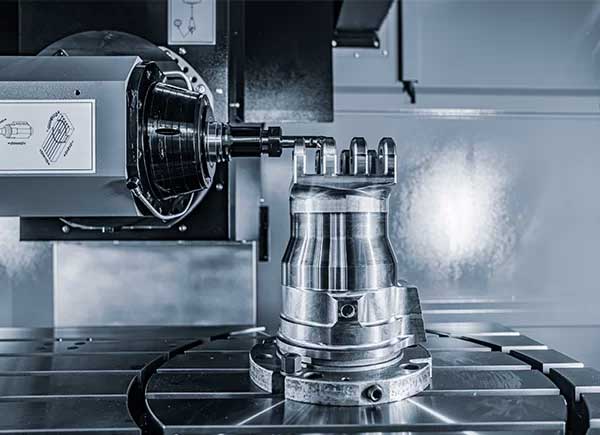
CNC machining is a subtractive manufacturing process where pre-programmed computer software controls the movement of tools and machinery.
The system guides the cutting tools to remove material from a solid block (often called a “workpiece”) to achieve precise dimensions and complex geometries.
Common CNC Processes
| Process | Description | Typical Materials |
|---|---|---|
| CNC Milling | Rotating cutting tools remove material layer by layer to form complex shapes. | Aluminum, ABS, Brass, Steel |
| CNC Turning (Lathe) | The workpiece rotates while a cutting tool shapes its outer surface. | Stainless steel, Copper, Nylon |
| CNC Drilling | Creates precise holes with controlled depth and diameter. | Plastics, Metals |
| CNC EDM (Electrical Discharge Machining) | Uses electrical sparks to remove material for ultra-fine detail. | Hardened steels, Titanium |
Advantages of CNC Machining
| Advantage | Description |
|---|---|
| High Precision | Achieves tolerances as tight as ±0.005 mm, ideal for precision industries. |
| Repeatability | Every part is identical to the digital model, ensuring consistent quality. |
| Material Versatility | Supports metals, plastics, composites, and even ceramics. |
| Efficiency | Automated programming reduces manual error and shortens production time. |
| Scalability | Suitable for both rapid prototyping and mass production. |
Applications Across Industries
- Automotive: Engine components, brackets, and housings.
- Aerospace: Lightweight aluminum parts and complex titanium structures.
- Medical: Surgical tools and custom implants with ultra-tight tolerances.
- Electronics: Enclosures, connectors, and heat sinks for high-performance devices.
- Consumer Products: Prototypes for industrial design and short-run production.
CNC Machining Workflow
- CAD Design: Engineers create a 3D model using CAD software.
- CAM Programming: The design is converted into machine-readable code (G-code).
- Setup & Calibration: The workpiece is fixed to the machine bed.
- Machining Process: CNC tools execute the programmed operations.
- Inspection & Finishing: Each part is inspected and may undergo polishing, anodizing, or coating.
Quality and Inspection
Quality control is a key part of CNC machining. Modern workshops integrate CMM (Coordinate Measuring Machines), laser scanners, and AI-driven inspection systems to ensure every part meets strict dimensional requirements.
Conclusion
CNC machining continues to define precision manufacturing by combining speed, flexibility, and accuracy.
With ongoing advancements in automation, AI, and hybrid manufacturing, CNC technology is becoming even more powerful — supporting faster prototyping and sustainable production for industries worldwide.
If you’re looking for high-quality CNC machining services, Ze-Tech Mold offers:
- Precision machining for metals and plastics
- Rapid prototyping and low-volume production
- Tight tolerance manufacturing and quality assurance
👉 Contact us today to discuss your next CNC project.